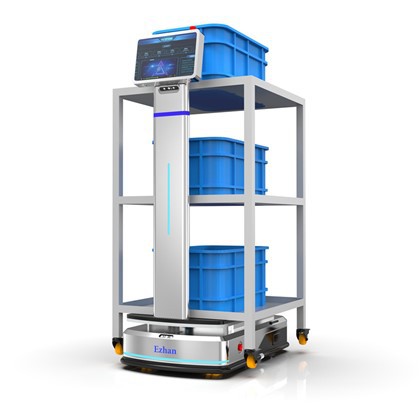
As a supplier of customized Autonomous Mobile Robots (AMRs) and Automated Guided Vehicles (AGVs), I often encounter questions from clients regarding the technical specifications of our robots, especially the maximum torque of the motors. In this blog post, I will delve into the concept of maximum torque in the context of AMR/AGV robots, its significance, and how it impacts the performance of our customized solutions. Customized AMR/AGV Robot
Understanding Torque in AMR/AGV Robots
Torque is a measure of the rotational force that a motor can generate. In the context of AMR/AGV robots, torque is crucial for several reasons. First, it determines the robot’s ability to start, stop, and change direction. A higher torque motor can accelerate and decelerate the robot more quickly, allowing for more efficient operation in dynamic environments. Second, torque is essential for carrying heavy loads. The greater the torque, the more weight the robot can handle without stalling or losing speed.
The maximum torque of a motor is the highest amount of torque it can produce under specific conditions. These conditions typically include the motor’s rated voltage, current, and temperature. When selecting a motor for an AMR/AGV robot, it is important to consider the maximum torque requirements based on the robot’s intended application. For example, a robot designed to transport heavy pallets in a warehouse will require a motor with a higher maximum torque than a robot used for light material handling in a laboratory.
Factors Affecting the Maximum Torque of AMR/AGV Robot Motors
Several factors can affect the maximum torque of a motor in an AMR/AGV robot. These include:
Motor Type
There are several types of motors commonly used in AMR/AGV robots, including DC motors, AC motors, and servo motors. Each type of motor has its own characteristics and torque capabilities. DC motors are known for their high starting torque, making them suitable for applications that require quick acceleration. AC motors, on the other hand, are more efficient and can provide a more consistent torque output over a wide range of speeds. Servo motors offer precise control and high torque density, making them ideal for applications that require accurate positioning and movement.
Motor Size and Design
The size and design of the motor also play a significant role in determining its maximum torque. Larger motors generally have a higher torque capacity than smaller motors. Additionally, the design of the motor, such as the number of poles and the winding configuration, can affect its torque output. For example, a motor with a higher number of poles will typically have a lower speed but a higher torque.
Load and Application
The load that the robot needs to carry and the specific application requirements also impact the maximum torque needed. A robot that needs to carry heavy loads or operate on uneven surfaces will require a motor with a higher maximum torque. Similarly, applications that require frequent starts and stops or high-speed maneuvers will also demand a motor with a higher torque capacity.
Calculating the Maximum Torque Requirements for AMR/AGV Robots
To determine the maximum torque requirements for an AMR/AGV robot, several factors need to be considered. These include:
Load Weight
The weight of the load that the robot needs to carry is one of the most important factors in determining the maximum torque requirements. The heavier the load, the more torque the motor will need to generate to move the robot. To calculate the torque required to move a load, the following formula can be used:
[T = F \times r]
Where (T) is the torque, (F) is the force required to move the load, and (r) is the radius of the wheel or pulley.
Acceleration and Deceleration
The acceleration and deceleration requirements of the robot also affect the maximum torque needed. A robot that needs to accelerate quickly or stop abruptly will require a motor with a higher torque capacity. To calculate the torque required for acceleration and deceleration, the following formula can be used:
[T = I \times \alpha]
Where (T) is the torque, (I) is the moment of inertia of the robot and the load, and (\alpha) is the angular acceleration.
Friction and Resistance
Friction and resistance in the robot’s wheels, bearings, and other components also need to be considered when calculating the maximum torque requirements. These factors can increase the amount of torque needed to move the robot. To account for friction and resistance, a safety factor is often added to the calculated torque requirements.
Importance of Maximum Torque in AMR/AGV Robot Performance
The maximum torque of a motor has a significant impact on the performance of an AMR/AGV robot. A motor with a higher maximum torque can provide several benefits, including:
Improved Acceleration and Deceleration
A motor with a higher maximum torque can accelerate and decelerate the robot more quickly, allowing for more efficient operation in dynamic environments. This can reduce the time it takes for the robot to complete tasks and increase overall productivity.
Increased Load Capacity
A motor with a higher maximum torque can handle heavier loads without stalling or losing speed. This makes it possible to use the robot for applications that require the transportation of large or heavy items.
Better Maneuverability
A motor with a higher maximum torque can provide better maneuverability, allowing the robot to turn and change direction more easily. This is especially important in applications where the robot needs to navigate through tight spaces or around obstacles.
Selecting the Right Motor for Your Customized AMR/AGV Robot
When selecting a motor for your customized AMR/AGV robot, it is important to consider the maximum torque requirements based on the robot’s intended application. Here are some tips to help you choose the right motor:
Determine the Load Requirements
The first step in selecting a motor is to determine the load requirements of the robot. This includes the weight of the load, the distance it needs to be transported, and the speed at which it needs to be moved. Based on these requirements, you can calculate the maximum torque needed to move the load.
Consider the Application Environment
The application environment also plays a role in selecting the right motor. For example, if the robot will be operating in a dusty or dirty environment, you may need to choose a motor that is more resistant to contamination. Similarly, if the robot will be operating in a hazardous environment, you may need to choose a motor that is explosion-proof.
Evaluate the Motor’s Performance Characteristics
In addition to the maximum torque, you should also consider other performance characteristics of the motor, such as its speed, efficiency, and reliability. A motor that is more efficient will consume less energy, which can reduce operating costs. A motor that is more reliable will require less maintenance, which can increase uptime and productivity.
Conclusion
The maximum torque of a motor is a critical factor in the performance of an AMR/AGV robot. By understanding the concept of torque, the factors that affect it, and how to calculate the maximum torque requirements, you can select the right motor for your customized AMR/AGV robot. This will ensure that your robot can operate efficiently, handle heavy loads, and navigate through dynamic environments.
Hybrid Robot If you are interested in learning more about our customized AMR/AGV robots or have specific requirements for your application, we encourage you to contact us for a detailed consultation. Our team of experts will be happy to assist you in selecting the right motor and designing a solution that meets your needs.
References
- Dorf, R.C., & Bishop, R.H. (2016). Modern Control Systems. Pearson.
- Krause, P.C., Wasynczuk, O., & Sudhoff, S.D. (2013). Analysis of Electric Machinery and Drive Systems. Wiley.
- Chapman, S.J. (2012). Electric Machinery Fundamentals. McGraw-Hill.
Shenzhen Ezhan Technology Co., Ltd.
We’re known as one of the most reliable customized AMR/AGV robot manufacturers and suppliers in China. With abundant experience, we warmly welcome you to buy bulk customized customized AMR/AGV robot from our factory. If you have any enquiry about cooperation, please feel free to email us.
Address: Room 1808, 1809, 1810, Building 2, Aipark, Baolong 4th Road, Longgang District, Shenzhen City
E-mail: sales01@ezhankeji.com
WebSite: https://www.ezhanrobot.com/
