As a solar power system supplier who’s spent the better part of a decade troubleshooting and optimizing systems for everything from small residential rooftops to large commercial farm arrays, I can tell you this: designing a solar power system isn’t just picking panels off a catalog and hooking them up. It’s a custom build, tailored to the unique quirks of a location, the needs of the user, and the hidden variables that can make a system either a reliable, cost-saving asset or a costly headache. Over the years, I’ve seen clients skip key steps—like miscalculating shading on a roof or underestimating how their energy use shifts seasonally—and end up with systems that produce 30% less power than they should. So let’s break down the non-negotiable factors I walk every potential customer through, every single time. Solar Power System
First, and most basic, is site assessment. You can’t design a system without knowing exactly where it’s going to live. For residential clients, this means climbing on the roof (or sending a trusted installer to do so) to measure available square footage, check roof orientation, and flag shading from nearby trees, chimneys, or even adjacent buildings. I once worked with a couple in a suburban neighborhood who wanted a 5kW array on their west-facing roof, but a 40-foot oak tree at the back of their property blocked 6 hours of afternoon sun. That’s a dealbreaker for a system that relies on consistent exposure. For commercial or industrial clients, site assessment expands to ground-mount layouts, utility grid interconnection points, and even soil stability for large arrays—we had a project in the Midwest a few years back where soft, shifting clay soil required deeper anchor posts to prevent array tilt, which would have messed up panel angle and power output.
Along with site assessment comes the big one: solar resource analysis. It’s not just “how much sun does this place get?” It’s granular, monthly sun hours, cloud cover patterns, and even temperature fluctuations, because panels are less efficient in extreme heat. A home in Arizona gets 15% more annual sun hours than a similar home in Oregon, but the Phoenix area’s summer temps can drop panel efficiency by 8-10% compared to Portland’s milder summers. We use NREL’s PVWatts Calculator for quick, baseline readings, but for custom projects, we pull local meteorological data to model expected production. I always make sure to note that a spot with high annual sun hours might have bad seasonal dips—like a home in the Pacific Northwest that gets 2,800 sun hours a year, but only 120 hours in December. If a client’s heating relies on electric, that winter dip can mean they still run their utility bills high, unless we design a system with battery storage to offset that gap.
Next, load profile and energy demand. This is where so many people go wrong: they size their system for the average daily usage, not when they use it. A family that runs the dishwasher, does laundry, and heats their water all in the evening has a very different load profile than a small business that runs 24/7 with most of its energy use during the day. Let’s use a recent example: a coffee shop client who initially asked for a 10kW system, thinking their average usage of 800 kWh a month would cover it. But when we dug into their meter data, we saw they use 60% of their energy between 7 a.m. and 3 p.m.—peak sun hours. That 10kW system would have produced enough total power, but 70% of its output would hit the grid during the day, when the coffee shop wasn’t using most of it, meaning they’d pay top dollar for evening utility power anyway. We adjusted to a 12kW system with net metering in mind, plus a small battery to store daytime power for evening use, and their utility bill dropped by 45% within six months. I tell every client: bring the last 12 months of utility bills, but also tell us about your habits. Do you run a pool pump at night? Do you work from home and use energy during weekends? That’s what shapes the right size.
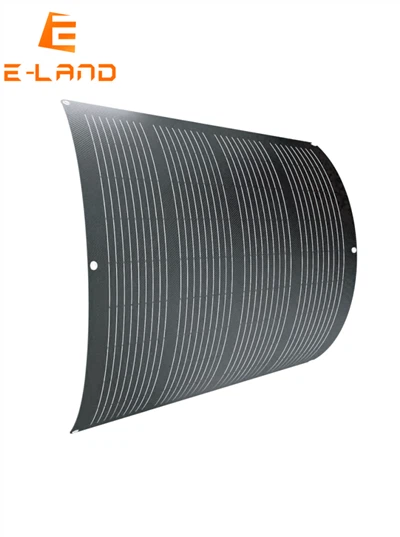
Then there’s panel and inverter selection, two pieces that work together like a engine and transmission. Panels have different efficiency levels, temperature coefficients, and durability ratings. For a small urban rooftop with limited space, high-efficiency monocrystalline panels make sense—they produce more power per square foot, even if they cost a bit more upfront. For a large farm with 10 acres of open space, lower-cost polycrystalline panels are a better bet, since you have room to spread them out and save on capital costs. I also prioritize panels with high temperature coefficients; a -0.25%/°C rating means they lose less efficiency in heat than a -0.35%/°C panel, which adds up over 25 years of operation.
Inverters are equally critical. The inverter turns the DC power panels produce into AC power your home or business uses, and it’s often the most overlooked component. String inverters are common and cheap, but they underperform if one panel is shaded or broken—like that oak tree I mentioned earlier, one shaded panel in a string can drag the whole string’s output down. For systems with shading or variable panel performance, microinverters or power optimizers are better: each panel has its own inverter, so a shaded one only loses its own output, not the whole array. For commercial projects, central inverters are more efficient for large arrays, but they require more maintenance. I always explain the trade-offs: string inverters work great for low-shade, uniform residential roofs, but microinverters are worth the extra cost for properties with consistent shading.
Battery storage is another factor that’s grown exponentially in importance over the last five years, as battery costs have dropped 70% since 2018. Back in 2015, batteries were a nice-to-have for off-grid systems; now, they’re a smart add-on even for grid-tied systems. First, you have to decide if you want a grid-tied system with backup, or an off-grid system entirely. Off-grid systems need enough battery capacity to power the load through cloudy weeks, plus a backup generator, which adds cost. For grid-tied, batteries let you store excess power you produce during the day to use at night, or during grid outages. I had a client in Texas last year who lost power for three days during a winter storm; their system with a 13kWh battery kept their fridge, heat, and medical equipment running, while their neighbors paid exorbitant fees for generators. But battery sizing depends on your load: a home with 1,000 kWh monthly usage might only need a 10kWh battery if they’re mostly using grid power during the day, but a small business that can’t afford downtime needs a 20kWh or larger battery. I also remind people to check compatibility with their inverter and panels—you can’t just buy any battery and hook it up; lithium-ion is the standard now, but lead-acid batteries are cheaper, albeit shorter-lived, for smaller off-grid projects.
Grid interconnection rules and net metering policies are two more local factors that will make or break a system. Net metering is the policy that lets you sell excess power your system produces back to the utility, and it varies wildly by state, county, and even utility company. In California, net metering 3.0 pays a fair rate for excess power, but in some parts of the Southeast, utilities only pay a fraction of the retail rate, making it less valuable. I have to check a client’s local utility’s net metering rules before designing a system—if the buyback rate is low, it might make more sense to size the system to cover your own use, rather than oversize it for grid sales. Interconnection rules are also a headache: some utilities require permits, electrical inspections, and even system upgrades to the grid, which can add 10-15% to the total cost. For a small residential system, that might be a $500 permit; for a commercial array, it could be $10,000 or more in upgrade costs. I build that into the quote early on, so there are no surprises down the line.
Durability and maintenance are two factors people rarely think about upfront, but they’ll haunt you for 25+ years. Panels have a 25-year performance warranty, but some are built to withstand hail, snow, and salt spray (critical for coastal properties) better than others. I once supplied a system to a home in Florida that used standard residential panels; two years later, salt spray corroded the frame and ruined the panels, costing the client thousands in replacements. Now, I always recommend marine-grade, corrosion-resistant panels for coastal areas, and panels with a high snow load rating for areas with heavy winter snow. Maintenance is also key: most modern systems are low-maintenance, but they need occasional cleaning, inverter checks, and tree trimming around the array. I offer annual maintenance plans, but I also design systems with easy access to panels and inverters, so clients can do basic checks themselves if they want.
Cost and return on investment (ROI) is the final piece, and it’s what most clients care about most. But ROI isn’t just “how much does the system cost?” It’s how long it takes to save you money. A residential system might cost $15,000 upfront, but with tax credits (the US federal solar tax credit is 30% through 2032, no cap), that drops to $10,500. If it saves you $1,200 a year on utility bills, that’s an 8.5-year ROI, with 15+ years of savings after that. For commercial systems, the numbers are even better, since businesses get larger tax incentives and save more on energy costs. But I never oversimplify ROI: if a system has high maintenance costs, or net metering rates are low, that ROI timeline can stretch. I always present three options: a budget system, a mid-tier system, and a premium system, so clients can choose what fits their needs and budget, not just the cheapest option.

Over the years, I’ve learned that the best solar systems aren’t the ones with the most panels or the highest price tag—they’re the ones that fit the person or property they’re built for. I’ve seen clients who tried to cut corners, skipping site assessments or buying cheap panels, end up regretting it. That’s why I take the time to walk through every single one of these factors with every customer, no matter how big or small the project is. If you’re considering a solar power system, don’t just go by what you see online or a sales pitch. Reach out, and we can walk through your site, your energy use, and what you need to get the most out of your system.
Solar Battery Pack References:
- National Renewable Energy Laboratory (NREL). PVWatts Calculator. https://pvwatts.nrel.gov/
- International Energy Agency (IEA). Solar Photovoltaic Basic Principles. 2022.
- U.S. Department of Energy. Solar Energy Technologies Office. Net Metering Policies. 2023.
- Solar Energy Industries Association (SEIA). Cost of Solar Panels Report. 2024.
- North American Electric Reliability Corporation (NERC). Distributed Energy Grid Interconnection Guidelines. 2023.
Hangzhou Huakun New Energy Equipment Co., Ltd.
As one of the most professional solar power system manufacturers and suppliers in China, we’re featured by quality products and good service. Please rest assured to wholesale bulk durable solar power system made in China here from our factory. We also accept customized orders.
Address: International Export Office, Huaxin Development Building B, Wener Road No.328, Westlake District, Hangzhou, China
E-mail: linda@hzhuakun.com
WebSite: http://www.hk-newenergy.net/
