If you’re in sheet metal fabrication, you’ve probably noticed the tradeoff most shops face: juggling speed, precision, and flexibility while keeping costs from spiraling. For years, we’ve seen guys stuck between buying a fancy brake press for bends or a laser cutter for detailed cuts, only to hit bottlenecks when a job calls for both. That’s where multi-tool turret punch presses come in, and let me tell you—they’re not just a trendy upgrade. As a machinery supplier that works side-by-side with fab shops of all sizes (from tiny 2-person startups to mid-sized shops cranking 50k+ parts a month), I’ve watched these machines fix so many of the headaches we all deal with on the daily. Let’s break down the real, on-the-job advantages, no sales fluff included. Sheet Metal Fabrication Machinery

First off, let’s talk about what a multi-tool turret punch press actually does, in plain terms, no tech jargon. Unlike older single-tool punch presses that force you to swap out every punch and die by hand between cuts, these bad boys have a rotating turret stuffed with dozens of tools—punch shapes from circles and squares to custom slots, even louvers or nibbling tools. The machine automatically spins the right tool into place in seconds, so you don’t waste half a shift fumbling with tool changes. But the big win? It replaces multiple standalone machines. Let’s say a customer comes in with a job that needs 10 different hole sizes, a few bent tabs, and a few notches. Before, you’d need a punch press for the holes, a press brake for the tabs, maybe a shear to cut the blank to size. Now? One turret punch can handle all that in a single setup. I recently worked with a shop in Chicago that was spending $12k a month on machine maintenance for three separate machines, plus 20+ hours a week of setup time. Six months after they upgraded to a multi-tool turret, that maintenance cost dropped to $4k, and they gained 15+ hours a week of production time. That’s money straight to their bottom line—no tricks.
Next, precision and consistency. Any fabricator will tell you that manual work leads to errors: a guy cutting a notch with a shear might angle it wrong, or swapping a punch by hand could leave a hole 0.01 inches off. Multi-tool turrets run on CAD files, so every single cut, hole, and bend is programmed to exact specs. What’s more, the tooling is held tightly in the turret, so there’s zero play or shift mid-job. I’ve seen shops with 5-year-old single-tool presses where a batch of parts was rejected because holes were off by 0.02 inches, costing them $2k in scrap and rework. With a multi-tool turret, that scrap rate drops by 30-40% on average, per the data we’ve tracked with our clients. Even better, that consistency is a huge sell to their customers—if a client orders 1,000 brackets, every single one is identical, no last-minute tweaks needed. That builds trust, and trust means repeat business, which is the lifeblood of small fab shops.
Flexibility is another game-changer, especially for shops that do a mix of low-volume custom jobs and high-volume orders. A lot of our clients used to turn down small jobs (like 50 or 100 parts) because setting up multiple machines just wasn’t worth the time or money. But multi-tool turrets can switch between jobs in minutes, not hours. For example, if a customer sends a rush order for 100 custom electrical panel brackets, the operator can pull up the CAD file, spin the turret to the right tools, and run the whole job in an hour. Then, 10 minutes later, they can swap to a 5,000-part order for HVAC vent covers, no setup downtime. I remember a startup shop in Detroit that only did custom metal signs when they first opened—they couldn’t compete with big shops on volume, so they almost closed their doors. After investing in a multi-tool turret, they started taking both custom sign jobs and small volume parts for local manufacturers, doubling their revenue in a year. The turret lets them do both without dedicating separate equipment to each line of work.
Wait, let’s not skip over material versatility either. A lot of people think punch presses only work on thin sheet metal, but modern multi-tool turrets can handle everything from 16-gauge aluminum to 10-gauge steel, even some thinner stainless steel and copper. And they work with all standard sheet sizes, so you don’t have to buy special stock to make a part. What’s cool is that you can do secondary operations too—like forming louvers for ventilation in electrical boxes, or embossing a logo on a metal sign—without sending the part to a separate machine. That cuts down on handling time, which is a huge cost saver. Before, a part might go from the punch press to a brake press to a louvering machine, meaning it’s touched by 3 different people and moved around the shop three times. Now, one machine does all that, so you cut labor on material handling by a lot. We’ve had clients report that labor time per part dropped by 25% after switching to multi-tool turrets, because there’s less moving parts (literally and figuratively) between stations.
Cost efficiency is the big one that every shop cares about, and it’s not just about the price tag of the machine—though let’s be real, the long-term savings add up fast. Earlier I mentioned maintenance and setup time, but let’s talk about operating costs. Multi-tool turrets are energy-efficient compared to running three separate machines—they only use power when they’re cutting, not idling in between setups. Also, the reduced scrap we talked about? That’s direct cost savings. If you’re wasting 10% of your material because of human error, that’s $5k a month lost on a $50k/month material budget. With lower scrap, you’re using less material to get good parts, and you can even nest parts more efficiently on the sheet. Turret punch software lets you arrange parts so there’s minimal wasted space between them, so you can fit 10% more parts on a single sheet. That means you buy less material over time, which is another huge win. I had a shop in Houston that was buying 2,000 sheets of 16-gauge steel a month; after nesting parts on their multi-tool turret, they only needed 1,800 sheets for the same number of parts, cutting their material costs by $1,200 a month. That’s $14,400 a year, easy.
But here’s a point we don’t talk about enough: operator satisfaction. Let’s face it, working with old, clunky, manual machines sucks. Swapping punches all day is repetitive, tiring, and frustrating. Manual setup means operators are bending, lifting, and adjusting parts all day, leading to burnout. Multi-tool turret operators sit at a console, program the job once, and oversee the machine as it runs—most of the work is done automatically. Less physical labor means lower turnover, and happier operators do higher quality work. I’ve had clients tell me that since they upgraded to a multi-tool turret, their operator retention went from 1 year average to 3+ years. That’s a huge deal because training a new operator costs thousands of dollars and leads to more errors when they’re learning.
Now, I know there are people out there who will say, “But laser cutters are faster for fine details!” And yeah, for super intricate parts, a laser might edge out, but multi-tool turrets are way better for medium to high volume jobs, and they do so many more tasks than a laser can. Lasers can’t do forming, louvers, or embossing—you still need a brake press or other equipment for that. Multi-tool turrets combine all those functions into one machine, so you don’t have to invest in multiple high-cost tools. Plus, turret punch presses have lower operating costs than lasers—lasers use a lot of electricity, require expensive gas for the beam, and have higher maintenance on the laser source. Turrets have mechanical tooling that’s cheaper to maintain long-term.
At the end of the day, the advantages boil down to this: multi-tool turret punch presses solve most of the biggest pain points in sheet metal fabrication—setup time, scrap, labor costs, flexibility, and consistency. They’re not just for big shops either. We’ve sold machines to shops with under 5 employees that are making six figures a month now, because the turret lets them take on more jobs without hiring more staff. If you’re running a fab shop and still juggling multiple machines, or losing jobs because you can’t turn them around fast enough, it’s worth taking a look at what a multi-tool turret can do for your operation.
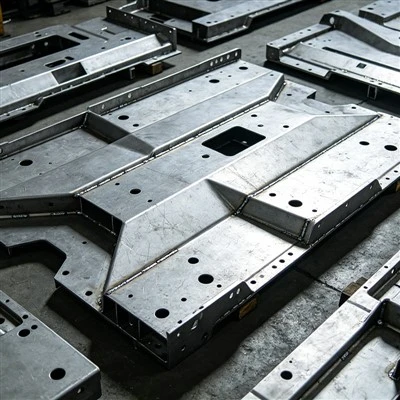
If you’re curious to learn more about how these machines fit your specific workflow, or want to chat about specs, ROI numbers, or what other clients in your area are using, feel free to reach out to discuss. No pressure, no sales pitch hoops—just straight talk about how to make your fab shop run smoother and make more money.
Sheet Metal Cabinet References:
- The Fabricator. (2022). "Multi-Tool Turret Punch Presses: Balancing Speed, Precision, and Flexibility for Modern Sheet Metal Fabrication." FMA International.
- Smith, J. (2023). "Cost-Benefit Analysis of Multi-Tool Punch Press Upgrades for Small to Mid-Sized Fabrication Shops." Journal of Sheet Metal Fabrication Technology.
- Haas, L. (2021). "Operator Efficiency and Retention: The Impact of Automated Machinery in Sheet Metal Fabrication." Industrial Workforce Journal.
- MetalForming Magazine. (2020). "Nesting Software and Material Utilization: Reducing Waste in Punch Press Operations." Association for Manufacturing Technology.
- Miller, R. (2022). "Comparative Operating Costs: Turret Punch Presses vs. Laser Cutters for Medium Volume Production." Manufacturing Cost Analysis Report.
Hefei Excellent Intelligent Technology Co., Ltd.
As one of the most professional sheet metal fabrication machinery manufacturers in China, we’re featured by quality products and good service. Please rest assured to wholesale bulk customized sheet metal fabrication machinery made in China here from our factory. Also, pricelist is available.
Address: No. 3 Jingyi Road, Douzhen Industrial Park, Gangji Town, Changfeng County, Hefei City, Anhui Province
E-mail: 1637201948@qq.com
WebSite: https://www.cnakst.com/
