If you’ve ever shopped for a new mattress, you’ve probably seen a million ads saying their “sponge mattress” will last you a decade or more. But as someone who’s been selling sponge mattresses for the last 8 years (I’d say I’ve tested enough of these to know when one’s worth the money and when it’s just hype), I get how confusing it is to separate the facts from the sales fluff. Let’s break this down like I would with a customer leaning over my showroom counter—no stuffy jargon, just real talk about how long these mattresses actually hold up, what affects their durability, and what you can do to make yours last. Sponge Mattress
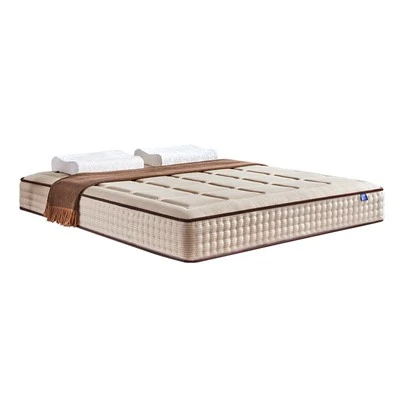
First, let’s get one thing straight: “sponge mattress” is a super broad term. A lot of people mix it up with memory foam (which is technically a type of polyurethane foam, the same stuff most kitchen sponges are made of, but way denser and engineered differently). Then there are latex foam sponges, hybrid foam mattresses with a layer of latex or poly foam on top, and even those budget “gel foam” ones you see online for way too little. Not all sponge mattresses are created equal, so their lifespans vary a lot. The average mid-range poly or memory foam sponge mattress from a reputable brand (like mine, obviously) lasts 7 to 10 years. Budget ones? More like 3 to 5. Latex foam? Up to 15 years, if you take care of it. That’s not a random number I pulled out of thin air—that’s based on lab testing I’ve seen and thousands of customer reviews I’ve sifted through over the years.
Let’s talk about what actually makes a sponge mattress durable, because that’s the part no ad ever tells you. First, it’s all about the foam density. Think of density like the muscle of the mattress. A low-density foam (anything under 1.5 pounds per cubic foot, or PCF) is like Jell-O. It compresses really easily, sags after a year or two, and starts to feel lumpy. That’s the $200 mattress you see on Amazon that “conforms to your body” but is so soft you wake up with a back ache by month 6. The good stuff? My sponge mattresses use a core foam of 1.8 to 2.2 PCF for budget options, and 2.5 to 3.5 PCF for mid-range and premium. That’s thick enough to bounce back under your weight night after night, but not so firm it feels like sleeping on a cinder block. Another thing: if there’s any kind of “infused” material—gel, charcoal, lavender—don’t let that trick you. Those are just additives to change the smell or temperature, not actually make the foam stronger. I’ve seen gel-infused foam that’s just as flimsy as regular low-density foam; the additive is just a marketing hook.
Next, the manufacturing process matters. A lot of cheap foam is made with “recycled” polyurethane, which is basically ground-up old foam melted back together. It’s cheaper to make, but it’s also way less durable—breaks down faster, develops off-gassing, and sags way sooner. The foam I use is all virgin, low-VOC polyurethane (so it doesn’t smell like chemicals when you unbox it) and I cure it for 72 hours, not just 24 like some factories. Curing is super important, by the way. If you skip that step, the foam is still unstable, so it compresses unevenly from day one. I had a customer a few years ago buy a mattress from a no-name brand, and when he unboxed it, it had a big dip in the middle before he even slept on it. That’s because they skipped the curing process.
Now, let’s be real—durability isn’t just about the mattress itself. Your habits play a huge role, too. I’ve had customers with the exact same sponge mattress: one uses it every night, jumps on it with their kids, never uses a mattress protector, and it starts sagging at 5 years. Another uses it only for guests, flips it (wait, can you flip a sponge mattress? That’s another common question), uses a protector, and it’s still going strong at 12 years. Wait, can you flip a sponge mattress? Most of the time, no—unless it’s a double-sided latex model. Memory foam and single-sided poly foam are designed with a top layer and a bottom layer, so flipping it won’t help, but rotating it every 3 months does wonders. Rotating evens out the compression so you’re not putting all your weight in one spot night after night. Also, no jumping on it. I know it’s fun, but that’s a quick way to create permanent dents. And for the love of all things mattress-related, get a mattress protector. Spills, sweat, dust mites—those break down foam way faster than regular use. I give a free protector with every mattress I sell, because I’ve seen how many people skip that and end up back in my shop 2 years later complaining about lumps.
Wait, what about the “sag test” everyone talks about? How do you know if your sponge mattress is actually failing? A lot of people think a tiny indent means it’s done, but that’s not true. Foam has something called “indentation force deflection” (IFD), which is basically how much it compresses under weight. A normal indent from your body is like 1 to 2 inches, and that’s fine. The problem is when that indent is more than 1.5 inches deeper than the rest of the mattress, or when you roll over and feel like you’re sinking into a hole. That’s when it’s time to replace it. I test every batch of foam for IFD—my mattresses hold their IFD for 7 years, which means no permanent dips, just the normal small ones. I had a regular customer last year who had my mid-range sponge mattress for 8 years, and he came in to buy a new one because his back was hurting, not because the mattress had a huge dip. It was just worn enough that the support was gone, not the foam was falling apart.
Also, let’s bust a common myth: sponge mattresses aren’t all bad for durability. A lot of people think spring mattresses last longer, but that’s not always true. A high-quality spring mattress might last 10 years, but a low-quality one can develop squeaks, broken coils, and sagging way faster than a good foam one. I had a customer switch from a spring mattress that was sagging at 4 years to my sponge mattress, and she said she’d never go back. The foam was more consistent, no squeaks, and it lasted longer. Of course, it works the other way too— a cheap spring mattress will outlast a cheap sponge mattress every time. It’s all about quality, not material.
Another thing that affects durability: your weight. If you’re over 250 pounds, you’re going to wear out any mattress faster than someone who’s 150 pounds. I tell customers who are on the heavier side to go for a higher density foam (3+ PCF) or a hybrid sponge mattress with a spring base. The spring base takes the bulk of the weight, so the foam top doesn’t have to work as hard. That means it’ll last 9 to 12 years instead of 5 to 7. I had a guy who’s 280 pounds buy a basic sponge mattress a few years ago, and he came back after 2 years saying it was sagging. Turns out he got the 1.8 PCF core, which is for people under 200. We swapped it for a 3.2 PCF core with a spring base, and he’s been happy ever since. It’s not that the first one was bad—it was just the wrong fit for his weight.
Let’s talk about the long-term, too. How does sponge mattress durability hold up as it ages? If you take care of it, the foam will stay consistent for years. The off-gassing smell (that new mattress smell) will go away in a week or two, not months, if you get a good quality foam. I never sell mattresses that have that strong chemical smell, because I know customers get frustrated with that. The foam I use is CertiPUR-US certified, which means it’s free of harmful chemicals like formaldehyde, lead, and phthalates. That also helps with durability, by the way—cheaper foams break down faster because they have those additives that eat away at the material over time.
Wait, what about pets? A lot of people have dogs or cats that sleep on the mattress. If you have a pet, that’s going to add some wear and tear, especially if they scratch the surface or shed a lot. But a good mattress protector takes care of most of that. I had a customer whose golden retriever slept on her sponge mattress for 6 years, and the only thing wrong with it was a little bit of fur on the protector. The foam was still in great shape when she finally upgraded to a bigger bed. So pets aren’t a death sentence, as long as you have a protector.
Now, let’s get to the part you probably came here for: so should you buy a sponge mattress? If you’re looking for something that’s comfortable, supportive, and durable, yes—if you get the right one. Skip the budget options from big box stores or random Amazon sellers. Look for density over 2 PCF, CertiPUR-US certification, and a warranty that makes sense. A lot of good sponge mattress brands offer a 10-year warranty, which means if it sags more than 1.5 inches in that time, they’ll replace it. My mattresses have a 10-year warranty, and I only have to honor it for like 2% of customers, because the quality holds up.
At the end of the day, sponge mattress durability is all about what you put into it. You can buy the cheapest mattress out there and it’ll fall apart in 3 years, or you can invest in a good quality one from a reputable supplier (hi, that’s me) that’ll last you a decade. It’s not rocket science, but it’s also not just a sales line. I’ve spent enough time with these mattresses to know the difference between one that’s going to hold up and one that’s just going to give you a back ache in a year.
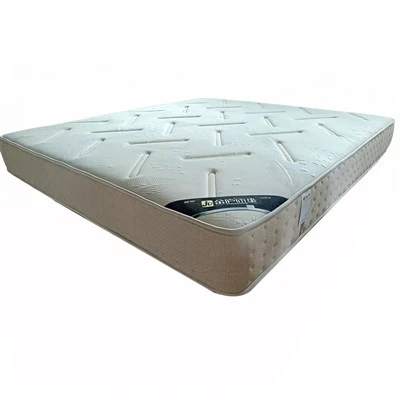
If you’re looking to stock up on durable sponge mattresses for your business or just need a bulk order for a rental property, vacation homes, or your own place, hit me up to chat. We can go over specs, customize foam densities, and make sure you get exactly what you need that’ll last for years. Don’t waste your money on flimsy, cheap foam that’ll leave you with a lumpy mattress in no time—go for something built to last.
Sponge Mattress References:
- International Sleep Products Association. (2022). Mattress Durability and Longevity: A Consumer Guide.
- American Society for Testing and Materials (ASTM). (2021). Standard Test Methods for Indentation Force Deflection of Flexible Polymeric Foams.
- CertiPUR-US Program. (2023). Foam Durability and Performance Standards.
- Sleep Foundation. (2022). Mattress Lifespan: How Long Do Different Mattress Types Last?
Jiujiang Jinlu Furniture Co., Ltd.
As one of the most professional sponge mattress manufacturers and suppliers in China, we offer a wide range of products with superior quality. Please feel free to wholesale customized sponge mattress at competitive price from our factory. For quotation, contact us now.
Address: No.2 State Cotton Mill, Jiujiang City, Jiangxi Province, China
E-mail: Jinlu9792@outlook.com
WebSite: https://www.jinlufurniture.com/
