In the manufacturing industry, the stability of a drilling and tapping center during operation is of paramount importance. As a seasoned supplier of drilling and tapping centers, I’ve witnessed firsthand the impact that a stable machine can have on productivity, quality, and overall business success. In this blog, I’ll share some key strategies and insights on how to ensure the stability of a drilling and tapping center during operation. Drilling and tapping center
1. Rigorous Machine Design and Manufacturing
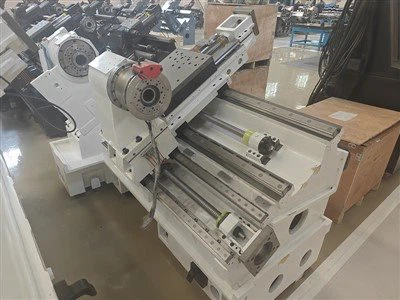
The foundation of a stable drilling and tapping center lies in its design and manufacturing. Our engineering team invests significant time and effort in the design phase, using advanced computer – aided design (CAD) software to optimize the machine’s structure. We focus on factors such as the distribution of mass, the stiffness of the frame, and the alignment of components.
For example, we use high – quality cast iron for the machine base. Cast iron has excellent damping properties, which can effectively absorb vibrations generated during the cutting process. This helps to reduce the impact of vibrations on the machining accuracy and the stability of the machine. Additionally, we pay close attention to the precision of component manufacturing. Each part is machined to strict tolerances to ensure proper fit and alignment, which is crucial for the overall stability of the machine.
2. Regular Maintenance and Inspection
Regular maintenance is essential for the long – term stability of a drilling and tapping center. We recommend a comprehensive maintenance schedule that includes daily, weekly, monthly, and annual checks.
On a daily basis, operators should perform basic checks such as cleaning the machine, checking the coolant level, and inspecting the tool holders for any signs of wear or damage. Weekly checks may involve lubricating the guide rails and ball screws, as well as checking the electrical connections for any loose wires.
Monthly inspections are more in – depth. We suggest checking the accuracy of the machine’s positioning system, the performance of the spindle, and the condition of the coolant filtration system. Annual maintenance should include a complete overhaul of the machine, including disassembly, cleaning, and replacement of worn parts.
By following a regular maintenance schedule, we can prevent potential problems from developing and ensure that the machine operates at its optimal level of stability.
3. Proper Tool Selection and Tool Management
The choice of tools has a significant impact on the stability of a drilling and tapping center. Using the right tools for the specific machining task can reduce cutting forces, minimize vibrations, and improve the overall quality of the machined parts.
We recommend selecting high – quality cutting tools that are designed for the material being machined. For example, when machining hard materials such as stainless steel, carbide – tipped tools are often a better choice than high – speed steel tools. Carbide tools have higher hardness and wear resistance, which can withstand the high cutting forces and temperatures generated during the machining process.
In addition to tool selection, proper tool management is also crucial. This includes tool storage, tool presetting, and tool life monitoring. Tools should be stored in a clean and dry environment to prevent corrosion and damage. Tool presetting can ensure that the tools are correctly positioned and aligned, which can improve the machining accuracy and stability. Tool life monitoring allows operators to replace worn tools in a timely manner, preventing poor machining quality and potential damage to the machine.
4. Operator Training and Skill Development
The operator plays a vital role in ensuring the stability of a drilling and tapping center. Well – trained operators are more likely to operate the machine correctly, follow the maintenance procedures, and detect potential problems early.
We provide comprehensive training programs for our customers’ operators. These programs cover topics such as machine operation, programming, maintenance, and safety. During the training, operators learn how to set up the machine correctly, select the appropriate cutting parameters, and troubleshoot common problems.
In addition to initial training, we also encourage continuous skill development. We offer refresher courses and updates on the latest technologies and best practices in the industry. By investing in operator training, we can improve the overall performance and stability of the drilling and tapping center.
5. Environmental Considerations
The operating environment can also affect the stability of a drilling and tapping center. Factors such as temperature, humidity, and vibration from other equipment in the workshop can have an impact on the machine’s performance.
We recommend installing the drilling and tapping center in a controlled environment. The temperature should be maintained within a certain range, typically between 20 – 25 degrees Celsius. This helps to prevent thermal expansion and contraction of the machine components, which can affect the machining accuracy.
Humidity should also be controlled to prevent corrosion of the machine parts. Additionally, the machine should be installed on a vibration – isolated foundation to minimize the impact of external vibrations.
6. Monitoring and Data Analysis
In today’s digital age, monitoring and data analysis have become important tools for ensuring the stability of a drilling and tapping center. We offer advanced monitoring systems that can collect real – time data on various parameters such as spindle speed, cutting forces, and temperature.
By analyzing this data, we can detect potential problems early and take proactive measures to prevent them. For example, if the cutting forces are increasing over time, it may indicate that the tool is worn or the machining parameters need to be adjusted.
We also use predictive maintenance techniques based on data analysis. By analyzing historical data and trends, we can predict when a component is likely to fail and schedule maintenance in advance. This helps to reduce downtime and improve the overall stability of the machine.
Conclusion
Ensuring the stability of a drilling and tapping center during operation requires a comprehensive approach that includes rigorous design and manufacturing, regular maintenance, proper tool selection and management, operator training, environmental control, and monitoring and data analysis.
XY Linear Way Vertical Machining Center As a supplier of drilling and tapping centers, we are committed to providing our customers with high – quality machines and comprehensive support. If you are interested in learning more about our products or have any questions about ensuring the stability of a drilling and tapping center, please feel free to contact us for a procurement discussion. We look forward to working with you to achieve your manufacturing goals.
References
- Groover, M. P. (2010). Fundamentals of Modern Manufacturing: Materials, Processes, and Systems. Wiley.
- Kalpakjian, S., & Schmid, S. R. (2013). Manufacturing Engineering and Technology. Pearson.
- ASME B5.54 – 2005. Performance Evaluation of Computer Numerically Controlled Machining Centers. American Society of Mechanical Engineers.
Smartech Machinery & Equipment Co., Ltd.
As one of the most professional tapping center machine manufacturers and suppliers in China, we also support customized service. Please rest assured to buy bulk tapping center machine made in China here from our factory. Contact us for more details.
Address: Room 2832, Changping Commercial Mansion, Shihua Road, Futian Free Trade Zone, Shenzhen, China
E-mail: smartech@smartechcnc.cn
WebSite: https://www.smartech-cnc.com/
