As a supplier of Ball Square Linear Guides, I often encounter inquiries from customers about the maximum axial load these guides can handle. Understanding this crucial parameter is essential for ensuring the proper selection and performance of linear guides in various applications. In this blog post, I will delve into the concept of the maximum axial load of Ball Square Linear Guides, exploring the factors that influence it and how to determine the appropriate load capacity for your specific needs. Ball Square Linear Guide

What is Axial Load?
Before we discuss the maximum axial load, let’s first clarify what axial load means. Axial load refers to the force applied parallel to the axis of the linear guide. In the context of Ball Square Linear Guides, this force can be either a pushing or pulling force along the direction of the guide’s movement. Axial loads are common in applications where linear motion is required, such as in machine tools, automation equipment, and robotics.
Factors Affecting the Maximum Axial Load
The maximum axial load that a Ball Square Linear Guide can withstand is influenced by several factors. These factors need to be carefully considered when selecting a linear guide for a particular application.
1. Ball Size and Number
The size and number of balls in the linear guide play a significant role in determining its load – carrying capacity. Larger balls can distribute the load more effectively, allowing the guide to handle higher axial loads. Similarly, a greater number of balls provides more contact points, which also increases the load – bearing capacity. For example, a linear guide with larger diameter balls and a higher ball count will generally have a higher maximum axial load compared to one with smaller balls and fewer balls.
2. Rail and Block Material
The material used for the rail and block of the linear guide is another important factor. High – quality materials with good mechanical properties, such as hardened steel, can withstand higher loads. Hardened steel has excellent strength and wear resistance, which allows it to handle large axial forces without deformation or excessive wear. The manufacturing process of the rail and block also affects their performance. Precision – machined components ensure a smooth and even distribution of the load, maximizing the guide’s load – carrying capacity.
3. Preload
Preload is the internal force applied to the balls in the linear guide to eliminate clearance. A proper preload can improve the rigidity and accuracy of the guide, as well as increase its load – carrying capacity. However, excessive preload can lead to increased friction and reduced service life. Therefore, it is crucial to select the appropriate preload level based on the application requirements. For applications that require high stiffness and accuracy, a higher preload may be necessary, but this will also reduce the maximum allowable axial load to some extent.
4. Lubrication
Lubrication is essential for the proper functioning of Ball Square Linear Guides. A well – lubricated guide reduces friction between the balls and the raceways, which not only improves the efficiency of the guide but also helps to distribute the load evenly. Insufficient lubrication can lead to increased wear and heat generation, which can significantly reduce the maximum axial load that the guide can handle. Therefore, regular lubrication and the use of high – quality lubricants are necessary to maintain the performance and load – carrying capacity of the linear guide.
5. Operating Conditions
The operating conditions of the linear guide, such as temperature, humidity, and the presence of contaminants, can also affect its maximum axial load. High temperatures can cause the material of the guide to expand, which may change the preload and the contact conditions between the balls and the raceways. Humidity and contaminants can lead to corrosion and wear, reducing the load – carrying capacity of the guide. Therefore, it is important to consider the operating environment when selecting a linear guide and take appropriate measures to protect it.
Determining the Maximum Axial Load
To determine the maximum axial load of a Ball Square Linear Guide, manufacturers typically provide load – rating data in their product catalogs. These data are based on standardized tests and calculations, which take into account the factors mentioned above. The load – rating data usually include the dynamic load rating and the static load rating.
The dynamic load rating is the load that the linear guide can withstand for a specified number of revolutions (usually 50 million revolutions) with a 90% probability of survival. This rating is used for applications where the guide is in continuous motion. The static load rating, on the other hand, is the maximum load that the guide can withstand when it is stationary without causing permanent deformation of the raceways or the balls.
When selecting a linear guide for an application, it is important to ensure that the expected axial load is within the allowable range of the guide’s dynamic or static load rating. In addition to the load – rating data, manufacturers may also provide guidelines on how to calculate the equivalent load, which takes into account the combined effects of axial and radial loads, as well as any moments acting on the guide.
Applications and Maximum Axial Load Requirements
Different applications have different requirements for the maximum axial load of Ball Square Linear Guides. Let’s take a look at some common applications and their load requirements.
1. Machine Tools
In machine tools, such as milling machines, lathes, and grinding machines, the linear guides are used to provide precise linear motion for the cutting tools and the workpieces. These applications often require high – accuracy and high – load – carrying capacity. The axial loads in machine tools can be quite large, especially during the cutting process. For example, in a heavy – duty milling machine, the axial load on the linear guide can reach several thousand Newtons. Therefore, linear guides with high dynamic and static load ratings are required for these applications.
2. Automation Equipment
Automation equipment, such as conveyor systems, pick – and – place robots, and assembly lines, also rely on linear guides for smooth and accurate linear motion. The axial loads in automation equipment can vary depending on the size and weight of the objects being handled. In general, these applications require linear guides with moderate load – carrying capacity and high – speed performance. For example, in a small – scale pick – and – place robot, the axial load on the linear guide may be in the range of a few hundred Newtons.
3. Medical Equipment
Medical equipment, such as X – ray machines, CT scanners, and surgical robots, require linear guides with high precision and reliability. The axial loads in medical equipment are usually relatively small, but the guides need to operate in a clean and controlled environment. For example, in a surgical robot, the axial load on the linear guide may be only a few tens of Newtons. However, the guide must provide smooth and accurate motion to ensure the safety and effectiveness of the surgical procedure.
Importance of Selecting the Right Maximum Axial Load
Selecting the right maximum axial load for a Ball Square Linear Guide is crucial for the performance and reliability of the entire system. If the selected guide has a load capacity that is too low for the application, it may lead to premature failure, such as excessive wear, deformation, or even breakage of the guide. This can result in downtime, increased maintenance costs, and potential safety hazards.
On the other hand, if the selected guide has a load capacity that is much higher than necessary, it may increase the cost of the system without providing any significant benefits. Therefore, it is important to accurately assess the axial load requirements of the application and select a linear guide with an appropriate maximum axial load.
Conclusion
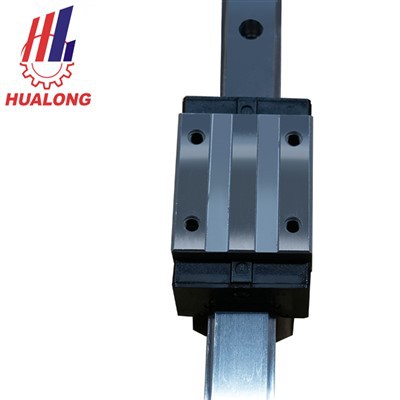
In conclusion, the maximum axial load of a Ball Square Linear Guide is a critical parameter that depends on several factors, including ball size and number, rail and block material, preload, lubrication, and operating conditions. By understanding these factors and referring to the load – rating data provided by the manufacturer, you can select the right linear guide for your specific application.
Roller Linear Guide As a supplier of Ball Square Linear Guides, we are committed to providing high – quality products and professional technical support. Our team of experts can help you determine the appropriate maximum axial load for your application and select the most suitable linear guide. If you have any questions or need further information about our products, please feel free to contact us for a detailed discussion and potential procurement.
References
- Manufacturer’s product catalogs of Ball Square Linear Guides.
- Engineering handbooks on mechanical design and linear motion systems.
- Research papers on the performance and load – carrying capacity of linear guides.
Fujian Province Hualong Machinery Co., Ltd.
As one of the leading ball square linear guide manufacturers and suppliers in China, our products have good reputation in the market. Please rest assured to wholesale bulk ball square linear guide made in China here from our factory. Welcome to view our website for more information.
Address: Huangshi Industrial Park, Putian city, Fujian Province, China
E-mail: jenkin@hualongm.com
WebSite: https://www.guidelinear.com/
