Hey there, solar enthusiasts! If you’re in the process of setting up a solar power system, one crucial thing you’ll need to figure out is which PV module clamp is right for your solar panels. Well, luck you – I’m a PV module clamp supplier, and I’m here to break it down for you. PV Module Clamp

First off, let’s talk about why PV module clamps are so important. These little guys are what hold your solar panels securely in place. Whether you’re installing panels on a rooftop, on the ground, or on a tracking system, the right clamp ensures that your panels stay put through all kinds of weather conditions – from strong winds to heavy snow.
Now, there are a few key factors you need to consider when choosing a PV module clamp. One of the most important is the type of solar panel you have. Solar panels come in different shapes, sizes, and frame designs, and not all clamps are compatible with every panel.
Compatibility with Your Solar Panel Frames
Most solar panels have aluminum frames, but the thickness and profile of these frames can vary a lot. Some clamps are designed for thin frames, while others work better with thicker ones. You’ve got to measure the frame of your solar panel accurately to find a clamp that fits snugly. A loose clamp can lead to your panels shifting over time, which is a big no – no.
Let’s say you have a standard 3 – 4mm thick aluminum frame. You’ll want a clamp that’s adjustable to accommodate this thickness. There are clamps with a flexible design that can grip frames within a certain range of thicknesses. These are great because they offer some leeway in case your panel frames aren’t exactly the standard size.
On the other hand, if you have a high – end solar panel with a unique frame design, you might need a specialized clamp. Some manufacturers make custom – fit clamps for their specific panel models. These clamps are engineered to work perfectly with the panel, ensuring maximum stability and performance.
Installation Location and Conditions
The place where you’re installing your solar panels also plays a huge role in choosing the right clamp. If you’re putting panels on a rooftop, you need to think about the pitch of the roof. A steeper roof might require clamps with a stronger grip to prevent the panels from sliding down.
Weather is another major factor. In areas with high winds, you’ll need clamps that are rated for high wind loads. These clamps usually have a more robust design, with features like extra – strong bolts or a locking mechanism to keep the panels firmly in place.
If you live in a region with a lot of snow, the weight of the snow can put additional stress on your panels and clamps. You’ll want clamps that can withstand this extra load without bending or breaking. Some clamps are designed with a wider base to distribute the weight evenly, reducing the risk of damage.
Types of PV Module Clamps
There are a few different types of PV module clamps out there, each with its own pros and cons.
Side Clamps
Side clamps are the most common type. They’re used to connect two adjacent solar panels together at the sides. These clamps are relatively easy to install and are widely available. They’re a good choice for most standard solar panel installations, especially on flat or slightly pitched roofs.
Mid – Clamps
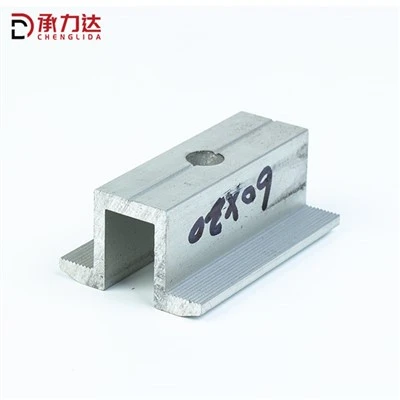
Mid – clamps are used to secure the middle of the solar panel to the mounting rail. They provide additional stability, especially for larger panels. Mid – clamps are often used in combination with side clamps to create a more secure installation.
End Clamps
End clamps are used at the ends of the solar panel array. They help to anchor the panels to the mounting structure and prevent them from moving. End clamps are particularly important for arrays on rooftops or in areas with high winds.
Material and Durability
The material of the PV module clamp is also crucial. Most clamps are made from either aluminum or stainless steel.
Aluminum clamps are lightweight and corrosion – resistant, which makes them a popular choice. They’re also relatively inexpensive. However, they might not be as strong as stainless steel clamps, especially in high – stress situations.
Stainless steel clamps, on the other hand, are extremely durable and can withstand a lot of wear and tear. They’re more resistant to corrosion and can handle higher loads. But they’re also more expensive than aluminum clamps.
When choosing between the two, think about your budget and the long – term durability you need. If you’re in a coastal area where the air is salty and corrosive, stainless steel might be the better option. But if cost is a major concern and you’re in a relatively low – stress environment, aluminum could work just fine.
Ease of Installation
Let’s face it, nobody wants to spend hours struggling to install clamps. That’s why ease of installation is an important factor. Look for clamps that come with clear instructions and are easy to handle.
Some clamps have a simple snap – on design, which makes them quick and easy to install. Others might require a few screws or bolts to secure them in place, but as long as the process isn’t too complicated, it should be manageable.
If you’re not a DIY expert, you might also want to consider clamps that are recommended by professional solar installers. They usually have a reputation for being easy to work with, which can save you a lot of time and headaches.
Cost – Efficiency
Of course, cost is always a consideration. You don’t want to overspend on clamps, but you also don’t want to go for the cheapest option and end up with a sub – standard product.
When comparing prices, make sure you’re comparing apples to apples. Look at the quality, durability, and features of the clamps. A slightly more expensive clamp that lasts longer and provides better performance could actually save you money in the long run.
You can also look for deals and discounts. Sometimes, suppliers offer bundle packages where you can get a set of clamps at a discounted price. Keep an eye out for these promotions to get the best value for your money.
Where to Get the Right PV Module Clamps
As a PV module clamp supplier, I can tell you that there are a few places you can look for the right clamps. You can buy them directly from manufacturers, but this might require a large order. Distributors are another option. They usually have a wider range of products and can offer more flexibility in terms of order quantity.
Online marketplaces are also a convenient way to shop for clamps. You can compare prices and features from different suppliers all in one place. Just make sure you’re buying from a reputable seller to ensure the quality of the product.
Conclusion
So, there you have it – a breakdown of what to consider when choosing a PV module clamp for your solar panels. As a supplier, I’ve seen firsthand how important it is to get the right clamps for the job. Choosing the wrong ones can lead to all kinds of problems, from unstable panels to reduced energy production.
If you’re still not sure which PV module clamp is suitable for your solar panel, don’t hesitate to reach out. We’re here to help you make the right choice. Whether you need advice on compatibility, installation, or just want to compare different products, we’ve got you covered.
Contact us today to start the conversation about your PV module clamp needs. Let’s work together to make your solar power system a success.
Other Photovoltaic Accessories References
- Various industry – standard solar panel installation guides
- Reports on solar panel performance and stability based on different clamp types
- Manufacturer’s specifications for PV module clamps
Wuxi Chenglida Machinery Co., Ltd.
We are one of the most professional pv module clamp manufacturers and suppliers in China, also support customized service. Please feel free to buy durable pv module clamp made in China here from our factory. Quality products and reasonable price are available.
Address: No.4 Ruifeng Road, Huishan District, Wuxi City
E-mail: postmaster@wxcldjx.com
WebSite: https://www.wuxi-chenglida.com/
