How to adjust the running speed of the trolley of a multi – functional electric hoist? Multi-functional Electric Hoist
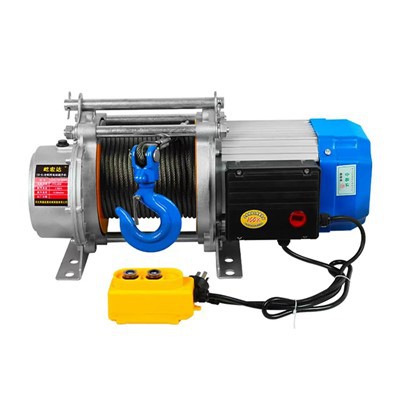
As a supplier of multi – functional electric hoists, I often encounter customers who are interested in adjusting the running speed of the trolley of our electric hoists. This is an important aspect as different working scenarios require different speeds to ensure efficiency, safety, and precision. In this blog, I will share some in – depth knowledge about how to adjust the running speed of the trolley of a multi – functional electric hoist.
Understanding the Basics of Trolley Speed in a Multi – functional Electric Hoist
Before we delve into the adjustment methods, it is crucial to understand what factors affect the running speed of the trolley. The trolley of a multi – functional electric hoist is driven by a motor, and the speed is primarily determined by the power and control system of the motor. Additionally, the load being carried, the track conditions, and the mechanical transmission components also play significant roles.
The power of the motor directly impacts the maximum speed the trolley can achieve. A more powerful motor generally allows for higher speeds. However, the control system is what enables us to adjust the speed within a certain range. The control system can be either a manual control or an automatic control, such as a variable – frequency drive (VFD).
Manual Speed Adjustment
Manual speed adjustment is a traditional and straightforward method. In a multi – functional electric hoist with manual speed adjustment, there is usually a control handle or a set of switches.
Using the Control Handle
The control handle is a common device for manual speed adjustment. By moving the handle forward or backward, you can control the direction of the trolley. Additionally, the degree to which you move the handle can affect the speed. For example, a slight movement of the handle may result in a slow speed, while a full – range movement will make the trolley run at a relatively high speed.
However, this method requires the operator to have a good sense of control. It is suitable for simple operations where the speed requirements are not extremely precise. For instance, in a small – scale workshop where the hoist is used to move light – to – medium – sized loads over short distances, manual speed adjustment can be very convenient.
Switch – based Speed Control
Some electric hoists are equipped with a set of switches for speed adjustment. There might be different switches labeled for different speed levels, such as low – speed, medium – speed, and high – speed. By toggling these switches, the operator can select the appropriate speed according to the task at hand.
This method is relatively easy to understand and operate. But it has limitations in terms of the number of available speed levels. If you need a more continuous range of speed adjustment, this may not be the most suitable option.
Automatic Speed Adjustment with Variable – Frequency Drives (VFDs)
Variable – frequency drives are becoming increasingly popular in the field of multi – functional electric hoists. A VFD is an electronic device that controls the speed of an AC motor by varying the frequency and voltage supplied to the motor.
How VFDs Work
The basic principle of a VFD is to convert the incoming fixed – frequency AC power into DC power through a rectifier. Then, an inverter converts the DC power back into AC power with a variable frequency and voltage. By adjusting the output frequency of the inverter, the speed of the motor can be precisely controlled.
For example, if the standard frequency of the power supply is 50Hz, and the motor runs at a certain speed at this frequency. By reducing the frequency to 25Hz, the motor speed will be approximately halved. This allows for a very smooth and continuous speed adjustment.
Advantages of Using VFDs
- Precision: VFDs offer a high level of precision in speed control. You can adjust the speed to exactly the value required for your specific application. This is particularly important in tasks where accuracy is crucial, such as in the assembly of delicate components in a factory.
- Energy Efficiency: When the trolley does not need to run at full speed, the VFD can reduce the power consumption by lowering the frequency and voltage supplied to the motor. This results in significant energy savings over time.
- Soft Start and Stop: VFDs provide a soft – start and soft – stop function. This means that instead of sudden acceleration or deceleration, the trolley gradually ramps up or down in speed. This reduces mechanical stress on the hoist components, extends their lifespan, and also improves the safety of the operation.
Other Considerations for Speed Adjustment
Load and Speed Relationship
It is important to note that the load being carried by the trolley affects the speed adjustment. A heavier load will require more power to move at the same speed compared to a lighter load. When adjusting the speed, you need to take into account the weight of the load. For example, when lifting a very heavy load, it may be necessary to operate the trolley at a lower speed to ensure the stability and safety of the operation.
Track Conditions
The condition of the track on which the trolley runs also impacts the speed. A smooth and well – maintained track allows the trolley to move more freely and at a higher speed. On the other hand, if the track is dirty, damaged, or has uneven surfaces, it will increase the friction and resistance, which may limit the achievable speed. Regular inspection and maintenance of the track are essential to ensure optimal trolley speed.
Conclusion
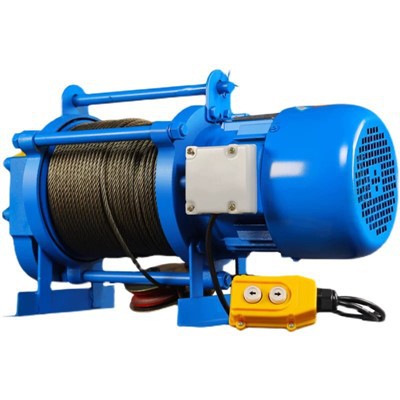
Adjusting the running speed of the trolley of a multi – functional electric hoist is a multi – faceted process. Whether you choose manual speed adjustment or automatic adjustment with a VFD, it is important to understand the basic principles and relevant factors. As a supplier, we are committed to providing high – quality multi – functional electric hoists with reliable speed – adjustment capabilities.
Lifting Auxiliary Frame If you are looking for a multi – functional electric hoist for your business, or if you want to know more about our products and services related to speed adjustment, please feel free to contact us for further procurement and negotiation. We have a professional team ready to assist you in finding the most suitable solution for your specific needs.
References
- "Electrical Drives and Control" by S.K. Bhattacharya
- "Lifting Equipment Engineering – Principles and Practices" by T.A. Varghese
Hebei Hengtai Crane Machinery Manufacturing Co., Ltd.
As one of the leading multi-functional electric hoist manufacturers in China, we warmly welcome you to buy bulk discount multi-functional electric hoist in stock here from our factory. All customized products are with high quality and low price. For more cheap products, contact us now.
Address: Weigezhuang Village, Donglu Township, Qingyuan District, Baoding City, Hebei Province
E-mail: hbht@cnhengtai.com
WebSite: https://www.cnhengtai.com/
