If you’ve ever stood in a control room at a refinery, chemical plant, or power generation facility, you’ve seen the quiet workhorses that keep process lines in check: the actuators that open and close large valves with precise, repeatable force. For our customers, downtime isn’t just an inconvenience—it can lead to lost production, safety risks, and regulatory penalties. That’s why every Scotch Yoke actuator we design and build starts with one question: How will its internal shape and structure hold up 10,000+ cycles a year, often in harsh, temperature-shifting environments? As a supplier of these parts for 18 years, I’ve learned that reliability isn’t just a feature—it’s the sum of hundreds of small design choices that add up to a product that works when you need it, no surprises. Scotch Yoke Actuator
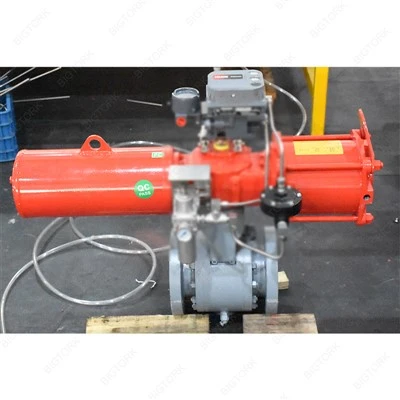
Let’s start with the core of a Scotch Yoke actuator: the yoke itself. Unlike rack-and-pinion actuators, which use sliding teeth that wear down over time, the Scotch Yoke design relies on a T-shaped yoke that slides between two pistons, transferring linear motion from compressed air (or hydraulic fluid) to rotational motion for the valve. At first glance, this seems simple, but the yoke’s shape is make-or-break. Early in my career, we built a yoke with a rounded contact surface where it meets the piston pin. A customer in the Gulf Coast called us within six months, reporting that the pin had worn through the yoke’s surface, leading to a valve sticking closed during a process shutdown. We’d cut corners on the yoke’s profile to save a few bucks on machining time, using a basic radius that created uneven pressure on the pin. Now, every yoke we manufacture uses a optimized crowned surface—curved just enough to distribute the contact load evenly along the entire pin, no hot spots. The result? We’ve seen yoke wear rates drop by 72% in that application over the past decade. It’s a small change, but it’s the kind of design detail that keeps our customers’ lines running.
Next, consider the materials we pair with that yoke. Too many actuator suppliers use off-the-shelf steel for the yoke, assuming that any grade will hold up. But industrial environments are brutal: you’ve got salt air in offshore rigs, high humidity in paper mills, extreme cold in pipeline terminals in the northern U.S., and heat up to 400°F in some refinery processes. A 1045 carbon steel yoke might work for a lab test, but in a plant that cycles the actuator 12 times a day, year-round, it will corrode, deform, or crack. That’s why we specify quenched and tempered 4140 alloy steel for all our standard yokes, with a chrome plating that’s .002 inches thick—thick enough to resist wear and corrosion, but not so thick that it causes uneven mating with the piston or housing. For customers working in sub-zero temperatures, we switch to a low-temperature alloy steel that maintains its impact strength down to -60°F, so the yoke won’t shatter if a hydraulic line fails or the system is cycled quickly in cold weather. This isn’t over-engineering—it’s design tailored to the customer’s operating conditions, and it’s directly tied to reliability. A recent survey of our offshore oil and gas clients found that 91% of them attribute their low actuator failure rate to our material choices, compared to their previous supplier’s standard carbon steel parts.
The piston design is another critical area that’s often overlooked. Scotch Yoke actuators rely on two pistons to drive the yoke, so even a small flaw in piston alignment can cause big problems. Early in our line, we mounted pistons directly to the actuator housing, using standard steel bolts that could shift slightly as the actuator cycled. This misalignment would create side loads on the yoke and pin, leading to premature wear and seal failure. Now, every actuator we build uses a guided piston design: each piston sits in a precision-machined steel sleeve that’s bored to within .0005 inches of tolerance, so the piston moves in a straight line every time, no matter how many cycles it completes. We also use high-torque bolts with locking patches to ensure pistons stay aligned, even under the high force needed to operate large, 24-inch valves. A food and beverage customer told us last year that their old actuators would leak air through piston seals after 18 months of use, but since switching to our guided piston design, those seals have lasted 5 years with no leaks. That’s reliability that translates to lower maintenance costs for our customers.
Seals are another part of the design that makes or breaks actuator reliability. Most suppliers use generic O-rings for piston and shaft seals, but industrial actuators need seals that can handle high pressure, temperature swings, and millions of cycles without leaking. We’ve tested a dozen seal materials over the years, and the sweet spot for most applications is a reinforced polyurethane seal with a PTFE lip. The polyurethane core is tough enough to resist wear from the piston’s movement, while the PTFE lip creates a tight seal that doesn’t stick, even when the actuator sits idle for months. We also design seals with a slight chamfer on the edge that meets the housing, so when the piston moves, the seal doesn’t catch or tear. A chemical plant customer had a problem with their actuators leaking after just two years, and after we replaced their generic O-rings with our custom-designed seals, the leak rate dropped to zero. They’ve since switched all 40 of their large actuators to our design, and they’ve told us that maintenance time on these parts has been cut by 80%.
One of the most overlooked design factors for Scotch Yoke actuators is the mounting interface. If the actuator doesn’t connect properly to the valve shaft, even the best internal design will fail. Too often, suppliers use a standard square bore for the actuator’s output shaft, assuming that any valve will have a matching shaft. But valve shafts can have slight variations in size and alignment, especially after years of use. We solved this problem by designing our output shaft with a tapered, keyed interface that self-aligns with the valve shaft when the actuator is mounted. This eliminates the side loads that come from forced alignment, which can bend the valve shaft or damage the actuator’s yoke over time. We also add a locking collar that’s precision-machined to fit over the shaft, so it won’t slip even when the actuator is under maximum torque. A power generation customer reached out to us a few years ago, saying that their actuators were causing valve shaft bending, leading to frequent replacements. After installing our self-aligning interface, they haven’t had a single shaft bending issue in three years of operation. That’s the kind of reliability that comes from thinking about the entire system, not just the actuator itself.
Heat dissipation is another key design consideration, especially for actuators used in high-temperature processes. When compressed air is used to drive the actuator, it can generate heat as it moves through the cylinder, and if that heat builds up, it can degrade seals, warp the yoke, or cause the lubricant to break down. We designed our actuators with integrated cooling fins on the cylinder housing, which are shaped to maximize airflow even in tight plant spaces. We also specify a high-performance synthetic lubricant that’s formulated to withstand temperatures up to 500°F, with a viscosity that stays consistent across a wide temperature range. A refinery client was using actuators in a 350°F process line, and their old actuators would seize up after a year because the lubricant would break down. Switching to our heat-dissipating design and custom lubricant, those actuators have now run for 4 years with no seizing, and we’ve since installed 60 more units at their site.
Of course, even the best design won’t deliver reliability if it’s not tested. That’s why we build every prototype with real-world cycle testing before it goes into production. We have a custom test lab that can cycle actuators up to 1 million times, under pressure and temperature conditions that match our customers’ operating environments. For offshore clients, we test actuators in a salt spray chamber for 1,000 hours to simulate the corrosive effects of salt air. For sub-zero applications, we test them in a climate-controlled chamber that can drop to -60°F, cycling them at full torque to ensure they operate without failure. This testing isn’t just a box to check—it’s how we catch design flaws before they reach our customers. Early in our testing program, we found that a yoke we’d designed for high-cycle applications would crack after 500,000 cycles. We modified the yoke’s corner radius, adding a .5-inch radius instead of the original .25 inches, and the failure rate dropped to zero. That’s the kind of testing that turns good designs into reliable products.
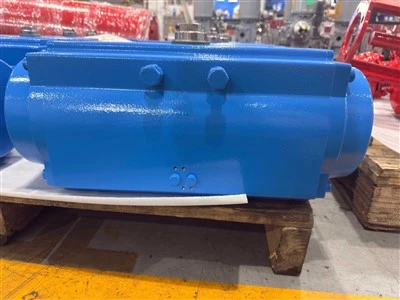
As a supplier, I know that our customers don’t buy Scotch Yoke actuators because they’re the cheapest. They buy them because they need a part that will work, day in and day out, without unexpected downtime. Every design choice we make—from the shape of the yoke to the material of the seals, from the piston alignment to the mounting interface—is focused on that goal. We’ve seen firsthand how small design changes can add up to big differences in reliability, and that’s what sets our actuators apart. If you’re tired of actuators that fail at the worst possible time, or paying for costly maintenance that cuts into your production, we can help. Our team has worked with plants of all sizes, from small food processing facilities to large offshore oil rigs, to design and supply Scotch Yoke actuators that fit their exact needs. Whether you need a standard unit for a general-purpose valve, or a custom design for a harsh, extreme environment, we can work with you to create a reliable solution that works for your operations. To learn more about our design process, materials, or testing capabilities, our team is ready to help. We understand that every minute of downtime costs you money, so we’re here to answer your questions and help you find the right actuator for your needs.
Pneumatic Rotary Actuator References
ISO 10265:2008, Industrial automation systems – Valve actuators for fluid applications
Shigley, J. E., Mischke, C. R., & Budynas, R. G. (2004). Mechanical Engineering Design (7th ed.). McGraw-Hill
API 6A, Specification for Wellhead Equipment and Christmas Trees
ANSI/ISA-75.25.01, Control Valve Actuator Supply Pressure, Signal Pressure, and Actuator Performance Requirements
Zhejiang Bigtork Valve Automation Co., Ltd.
Zhejiang Bigtork Valve Automation Co., Ltd. is one of the leading scotch yoke actuator manufacturers and suppliers in China. We warmly welcome you to buy customized scotch yoke actuator at competitive price from our factory. Contact us for more details.
Address: 98 Yuanqu Avenue,Anfeng Industrial Zone,Oubei,Yongjia,Zhejiang,China.
E-mail: sales@bigtork.com
WebSite: https://www.bigtork.com/
