As a GGD Cabinet supplier with over a decade of hands-on experience, I’ve stood on countless construction sites watching teams rush through installations—and seen far too many GGD cabinets shift, tilt, or even fail to operate properly just months later. The worst part? Most of those issues stem from small, avoidable missteps during setup, not flaws in the cabinets themselves. GGD cabinets, which are low-voltage switchgear units designed for industrial and commercial power distribution, need rock-solid stability to protect electrical components and the teams relying on consistent power. Over the years, I’ve refined a step-by-step process that doesn’t just “install” a cabinet—it ensures it stays secure for its entire lifecycle. GGD Cabinet

Let’s start with the foundation, because a cabinet is only as stable as the surface it sits on. I can’t tell you how many times I’ve arrived at a job site to find a concrete slab with a thin layer of loose dust, or a metal frame that’s slightly warped from construction debris. Before you even uncrated a GGD cabinet, you need to prep the installation surface to eliminate any hidden weaknesses.
First, inspect the base: For indoor installations on concrete, check that the slab is level within 2 millimeters per meter. Use a precision spirit level (not the basic tool you keep in a toolbox) to measure along the front, back, and both sides—even a 3-millimeter slope over a 2-meter span will put uneven stress on the cabinet’s frame over time. If the slab has cracks or uneven patches, use a high-strength epoxy grout to fill gaps and create a smooth, rigid base. For outdoor installations or on raised metal platforms, add a 10-millimeter thick steel leveling plate across the entire bottom of the cabinet’s base frame—this distributes the weight evenly and prevents shifting if the platform sags. I always recommend spending extra time here; a friend of mine, an electrical contractor, skipped this step on a 2021 project and had to re-level four cabinets just six months later when their metal platform warped under heavy load.
Next, cabinet anchoring is non-negotiable, not optional. GGD cabinets are heavy—empty, a standard 24-module unit weighs around 120 kilograms, and add circuit breakers, transformers, and wiring, and you’re looking at 200+ kilograms. Without proper anchoring, a small earthquake, accidental bump from a forklift, or even just the constant vibration from adjacent machinery can make it move.
Here’s the rule I’ve stuck to for years: Use heavy-duty expansion anchors rated for at least twice the cabinet’s total weight. For concrete bases, drill holes that are 10 millimeters wider and 10 millimeters deeper than the anchor’s recommended size to ensure a tight fit. Insert mechanical anchors (not adhesive ones—adhesives fail over time with temperature changes) and tighten them to the manufacturer’s specified torque, usually around 50 Nm for standard cabinets. I also tell installers to use at least four anchors for small cabinets (under 10 modules) and six for larger ones (10+ modules), placing them at each corner of the base frame and one midway along the back edge. Never anchor only the front or only the sides—balanced anchoring stops any movement, even from unexpected angles.
Then comes cabinet alignment, which is where many installers cut corners. A GGD cabinet is designed to connect to adjacent units and external wiring, so even a 1-degree tilt can cause misalignment in bus bars or wiring connectors, leading to overheating or loose connections. To get this right, place temporary shims (use non-conductive nylon shims, never wood, which can rot or conduct electricity) under the base frame at each anchor point until the spirit level shows a perfect balance across all axes. Once aligned, tighten the anchors gradually in a crisscross pattern—this prevents the frame from twisting as you tighten each bolt. After final tightening, double-check the level again; sometimes shifting the cabinet slightly when tightening anchors can throw it off. I once had a team that rushed this step on a job for a food processing plant, and within a year, two cabinets had misaligned bus bars that caused a 4-hour power outage during a peak production shift. That mistake cost them thousands in lost revenue—and taught me to emphasize rechecking alignment at every stage.
Wiring and internal component installation also play a role in long-term stability, a point that’s often overlooked. When routing power cables into the GGD cabinet, never let them hang loosely inside the frame. Use cable glands rated for the cabinet’s enclosure type (IP54 for indoor, IP65 for outdoor) and secure cables to the internal DIN rails or cable trays with cable ties rated for high heat (90°C or higher). Loose cables create uneven weight distribution, pulling on the cabinet’s internal frame over time and causing small shifts. Also, avoid over-tightening cable ties—this can crack plastic cable housings or bend metal bus bars, which compromises both functionality and stability. When connecting adjacent GGD cabinets, ensure the inter-cabinet links are tensioned evenly; misaligned links can pull the cabinets out of alignment, so use a torque wrench to set the link bolts to the manufacturer’s recommendation.
Finally, post-installation checks to confirm stability before leaving the job site. Most installers test the cabinet’s electrical function right away, but few do a physical stability test. Here’s a quick, reliable method: Grab the top front corner of the cabinet and apply gentle side-to-side pressure. If it moves at all, that’s a problem—go back and check anchors and alignment. For larger cabinets, use a pry bar (placed on the base, not the frame) to gently test for movement; any shift means you missed a spot. I also recommend taking a photo of the spirit level on the cabinet’s front and back, and saving it with the project files—this gives you a reference if issues pop up later, and shows the client you followed proper installation protocols.
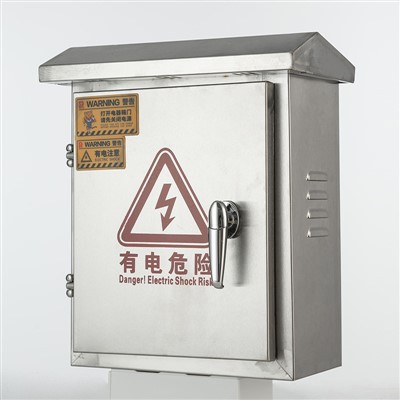
At the end of the day, ensuring a GGD cabinet’s stability isn’t about using fancy tools—it’s about paying attention to the small details that add up. As a supplier, we don’t just provide cabinets; we stand by them, which means supporting installers with clear guidance on every step. If you’re working on a project and want to make sure your GGD cabinets are installed securely, or have questions about the right materials or methods, don’t hesitate to reach out. We’re here to help ensure your electrical systems stay stable, safe, and functional for years to come.
Electrical Enclosure References
- International Electrotechnical Commission (IEC) 60439-1, Low-voltage switchgear and controlgear assemblies – Part 1: General rules
- National Electrical Manufacturers Association (NEMA) Standards for Low-Voltage Switchgear and Controlgear, Publication PB-2
- GGD Cabinet Installation and Maintenance Manual, Local Low-Voltage Electrical Equipment Suppliers Association, 2022 Edition
Shandong Qinghua Yike Electric Co., Ltd.
As one of the most experienced ggd cabinet manufacturers in China, we also support customized service. We warmly welcome you to buy durable ggd cabinet for sale here from our factory. If you have any enquiry about cooperation, please feel free to email us.
Address: No. 378 Taozhuang Village, Zaoyuan Town, Lanshan District, Linyi City, Shandong Province
E-mail: admin@sd-qhyk.com
WebSite: https://www.qhecobox.com/
