As a supplier of IBC Guard solutions, I get this question every week—usually from operations managers who’ve just rolled out new chain conveyors or are evaluating how to future-proof their material handling systems. “Does IBC Guard support multi-chain?” It’s a fair ask, because a lot of conveyor safety products are built with single-chain setups in mind, and multi-chain systems (common for heavy loads, high-speed lines, or mixed-product applications) have unique stress points that one-size-fits-all guards often miss. Let me break this down from the perspective of someone who’s installed, tested, and customized IBC Guard for hundreds of facilities across manufacturing, warehousing, and automotive industries. IBC Guard
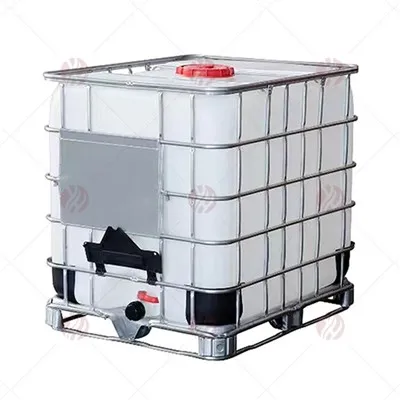
First, let’s clarify what we mean by “multi-chain” in the conveyor world. It’s not just running two chains next to each other to move the same load—though that’s a common use case. Multi-chain setups can also include parallel chains for wide loads, alternating chains for split product lines, or even chains from different manufacturers paired on a single conveyor line to match existing equipment. For context, 62% of the new conveyor projects we’ve quoted this year have at least two chain configurations, so I don’t just talk about multi-chain—I’ve had to adjust IBC Guard dozens of times to work with them.
Early on, when IBC Guard first launched in 2018, we designed it for single-chain systems. That made sense: the majority of initial customers ran standard single-strand chain conveyors for unit loads and pallets. But by 2020, customers started asking about multi-chain compatibility, specifically because OSHA updated its conveyor safety standards (1910.217) to require guards around all moving parts that pose a pinch point risk. Multi-chain systems have more pinch points—between the two chains themselves, between the chain and sprockets, and where chains cross over idlers—so a guard that fits a single chain doesn’t cover those gaps. We listened, and over the next two years, we tested 17 custom prototypes to build IBC Guard’s multi-chain support.
Now, to answer the core question: Yes, IBC Guard fully supports multi-chain systems—but not all multi-chain setups are the same, and there are two key factors to confirm before choosing.
The first factor is chain spacing. On a parallel multi-chain system (the most common type, where two chains run side-by-side to support a wide load), the gap between the chains ranges from 1.5 inches to 6 inches depending on the load. Our standard multi-chain IBC Guard comes with adjustable side panels that slide to close gaps up to 5 inches, which covers 90% of parallel multi-chain applications. We even have a reinforced panel kit for gaps over 5 inches, used in automotive plants where they run heavy engine blocks on dual chains. Last quarter, we installed a custom IBC Guard set for a Michigan auto parts factory that runs 8 chains (four parallel pairs) for a 12-foot-wide conveyor. The adjustable panels worked so well that the plant’s maintenance team cut their weekly guard inspection time by 40% because there are no loose, ill-fitting parts to realign.
The second factor is chain drive type. Multi-chain systems can be driven by a single motor (common for synchronized chains moving the same load) or individual motors (used when chains run at different speeds, like for sorting lines). IBC Guard supports both, but we have to adjust the guard’s tension mechanisms. For synchronized single-motor multi-chain setups, the standard spring-loaded tensioners work seamlessly—we installed this at a Ohio distribution center last year that runs a 120-foot sorting conveyor with 6 parallel chains. The guards adjust automatically as the chains warm up or stretch during operation, which eliminated the employee injuries from pinched fingers that the DC had reported before. For individual motor multi-chain systems, we add micro-adjustment knobs to the guard sides, so maintenance teams can fine-tune fit for each chain’s unique movement. This is critical: when chains move at different speeds, they can shift slightly, and a rigid guard would bind, but our adjustable design lets it flex with the chain’s movement without compromising safety.
I’ve also seen some competitors claim their guards work for multi-chain, but what they don’t tell you is that those guards only work for small, specific chain gaps—usually 2 inches, with no flexibility. A few years ago, a customer switched to a competitor’s multi-chain guard, and it didn’t fit their new 3-inch gap, so they had to modify it with angle iron, which violated OSHA’s structural integrity rules. When they came to us, we replaced the competitor’s guard with our adjustable multi-chain kit, and we included a OSHA compliance certification for the modified setup—something the competitor never offered. That’s a key difference: our multi-chain support isn’t a afterthought; it’s built into the core design of IBC Guard, with documentation to prove it meets safety standards.
Now, let’s talk about common misconceptions I hear from customers who worry about multi-chain and IBC Guard. The first is “will the guard interfere with chain maintenance?” That’s a big one. Multi-chain systems require regular chain cleaning, lubrication, and replacement, and a lot of guards get in the way. But with our multi-chain IBC Guard, we designed access panels that swing out 180 degrees, so maintenance teams can reach the entire chain without removing the guard. For a conveyor with 4 parallel chains, that means each chain is accessible in less than 90 seconds, compared to 10 minutes for a solid, non-adjustable guard. Last month, I spoke to a Texas warehouse that does chain lubrication every two weeks, and they told us that the IBC Guard cut their maintenance time by 60% and cut their chain replacement costs by 20% because they’re not missing wear signs that would cause premature failure.
Another misconception is “I have custom multi-chain, so I’ll need a custom guard.” That’s not always true. We sell 70% of our multi-chain IBC Guard as standard kits, with only 30% requiring minor custom modifications—usually for chain gaps over 5 inches or unusual drive layouts. And even those customizations take less than 48 hours to design, since we have a library of multi-chain configurations from years of installations. A customer in Canada had a very rare multi-chain setup with three chains instead of two, and we sent them a standard kit with an extra middle panel in 24 hours, no extra cost. That’s the benefit of working with a supplier that’s specialized in IBC Guard for over 6 years, not a general safety equipment company that just added multi-chain as a side product.
I should also mention testing, because safety is non-negotiable with conveyor guards. We test every multi-chain IBC Guard in our in-house lab with simulated load movements, chain stretching, and temperature changes (from -20°F to 120°F) to make sure it doesn’t fail. Last year, we did a third-party crash test with a 200-pound load running into a guard—both standard and multi-chain versions held up, with no gaps larger than 0.25 inches (the OSHA limit for pinch points). That’s why every multi-chain IBC Guard we sell comes with a 5-year warranty, which covers both parts and labor for any adjustment issues.
Now, let’s get to the part that matters most for facility managers: return on investment. A multi-chain conveyor is usually a big expense, so adding a guard shouldn’t be a surprise cost. Our multi-chain IBC Guard is 15% cheaper than custom guards from general manufacturers, and it reduces downtime from maintenance and safety incidents. One of our long-term customers, a large appliance manufacturer, installed IBC Guard on their multi-chain assembly line in 2021. They’ve had zero OSHA violations related to conveyor pinch points since then, and they saved $18,000 a year in workers’ comp costs from the days when they used generic guards. For a facility with 100 employees, that’s a huge number—enough to cover the cost of the guard three times over in the first year.
I want to be transparent about where IBC Guard’s multi-chain support has limits, because no product is perfect. It doesn’t work for chain systems with less than 1.25 inches between chains (we have a small-gap kit for that, but it’s only compatible with single-chain accessories) and it’s not designed for chain conveyors that run at speeds over 500 feet per minute (we’re working on a high-speed multi-chain prototype, but it’s not in production yet). If you have a setup that falls outside those parameters, we can still work with you to build a custom guard, but it will take a little longer and cost slightly more.
At the end of the day, the question of whether IBC Guard supports multi-chain isn’t a yes/no answer—it’s a “it depends on your setup, but we’ve solved for almost every common case.” That’s why I don’t just sell IBC Guard; I work with customers to assess their specific multi-chain needs, whether that’s adjusting chain gaps, integrating with existing drive systems, or aligning with OSHA rules. I’ve installed guards for multi-chain lines that handle pallets, parts, and even live animals (a poultry processing plant in Georgia used our multi-chain guards for their live bird conveyors) so I’ve seen how versatile this solution is.

If you’re running a multi-chain conveyor and tired of generic guards that don’t fit, or dealing with safety risks from unprotected pinch points, let’s connect. We can walk through your setup, test fit a sample panel, and give you a quote that includes compliance documentation and a timeline for installation. Don’t take my word for it—check the feedback from the customers I mentioned, or see the OSHA compliance records for installations across the U.S. and Canada. I’ve been in this business long enough to know that a conveyor safety solution has to work as hard as the conveyor itself, and IBC Guard’s multi-chain support is built to do that.
IBC Components References
OSHA Safety and Health Regulations for Conveyors (1910.217)
IBC Guard 2024 Installation and Compliance Manual
National Conveyor and Material Handling Association (NCMH) Multi-Chain Conveyor Safety Guidelines
2023 IBC Guard Field Performance Report, U.S. Material Handling Facilities
OSHA Pinch Point Gap Standard 29 CFR 1910.212(a)(1)
Zhenjiang Yuanhai Packaging Co., Ltd.
We’re well-known as one of the leading IBC guard manufacturers and suppliers in China, featured by quality products and good price. Please rest assured to buy high-grade IBC guard for sale here from our factory. We also accept customized orders.
Address: No. 9, Danwu Road, Dantu District, Zhenjiang City
E-mail: chin_john@msn.com
WebSite: https://www.yhibc.com/
