When it comes to control cables, one of the most common questions we encounter as a control cable supplier is about the difference between twisted and non-twisted control cables. This is an important topic because the choice between these two types of cables can significantly impact the performance, reliability, and suitability of a control cable system for a particular application. In this blog post, I’ll delve into the characteristics, advantages, and disadvantages of both twisted and non-twisted control cables, helping you make an informed decision for your next project. Control Cable
1. Basic Structure
Let’s start with the fundamental structure of these two types of control cables.
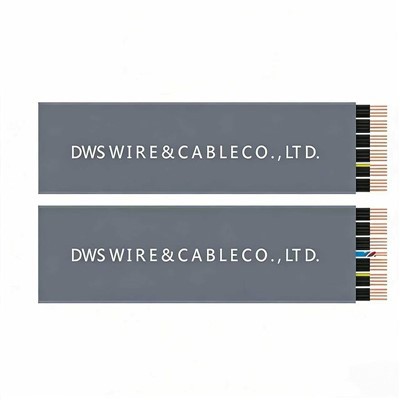
Non-twisted control cables, as the name implies, consist of individual conductors that run parallel to each other within the cable jacket. These conductors are typically insulated from one another to prevent short – circuits. This simple parallel arrangement is easy to manufacture and is often used in applications where cost – effectiveness and straightforward installation are priorities.
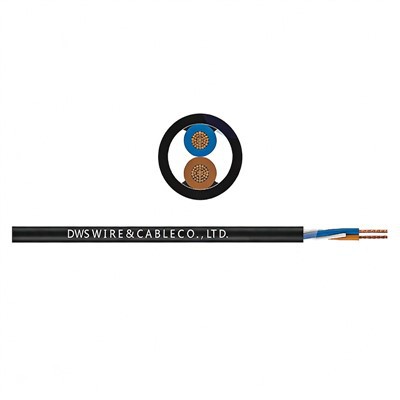
On the other hand, twisted control cables have their conductors twisted around each other in a helical pattern. The number of twists per unit length, also known as the twist pitch, can vary depending on the cable design and application requirements. The twisting process can be done in pairs (twisted pairs), or multiple pairs can be further grouped and twisted together.
2. Electromagnetic Interference (EMI) and Radio Frequency Interference (RFI)
One of the most significant differences between twisted and non – twisted control cables lies in their ability to handle electromagnetic and radio – frequency interference.
Non – Twisted Cables
Non – twisted cables are more susceptible to EMI and RFI. Since the conductors run parallel, they can act like antennas, picking up electromagnetic fields from external sources such as motors, power lines, and radio transmitters. This interference can corrupt the signals traveling through the cables, leading to data errors, signal degradation, and in some cases, complete system failure. For example, in a factory environment filled with large motors and high – voltage equipment, a non – twisted control cable may be constantly bombarded with electromagnetic noise, compromising the accuracy of control signals sent to sensitive machinery.
Twisted Cables
Twisted cables, however, are designed to mitigate EMI and RFI. The twisting configuration ensures that the magnetic fields induced by external sources cancel each other out to a large extent. When a magnetic field from an external source affects a twisted pair, the induced voltages in the two conductors of the pair are equal in magnitude but opposite in polarity. As a result, when the signals are combined at the receiving end, these induced voltages cancel each other, reducing the overall interference. This makes twisted control cables ideal for applications in electrically noisy environments, such as industrial automation, telecommunications, and data centers.
3. Crosstalk
Crosstalk is another important factor to consider when comparing twisted and non – twisted control cables. Crosstalk occurs when the electrical signals in one conductor interfere with the signals in an adjacent conductor within the same cable.
Non – Twisted Cables
In non – twisted cables, the parallel arrangement of conductors makes them more prone to crosstalk. The electromagnetic fields generated by the current flowing through one conductor can easily couple with the adjacent conductors, causing unwanted signal interference. This can be a significant problem in multi – conductor control cables where multiple signals are transmitted simultaneously. For instance, in a cable used to control multiple sensors in a monitoring system, crosstalk between the conductors can lead to inaccurate sensor readings and false alarms.
Twisted Cables
Twisted cables help reduce crosstalk. The twisting of conductors changes the relative position of each conductor with respect to the others along the length of the cable. This disrupts the coupling of electromagnetic fields between adjacent conductors, minimizing the crosstalk effect. Additionally, different pairs within a multi – pair twisted cable can be twisted at different twist pitches, further reducing the potential for crosstalk between pairs.
4. Mechanical Properties
The mechanical properties of twisted and non – twisted control cables also differ.
Non – Twisted Cables
Non – twisted cables are generally more rigid and less flexible compared to twisted cables. The parallel arrangement of conductors restricts the cable’s ability to bend without causing damage to the conductors. This lack of flexibility can make installation in tight spaces or applications requiring frequent cable movement challenging. However, in some static applications where the cable is not subject to bending or movement, this rigidity can be an advantage as it provides better structural stability.
Twisted Cables
Twisted cables, on the other hand, are more flexible. The helical twisting of conductors allows the cable to bend more easily without causing significant stress on the individual conductors. This makes them well – suited for applications where the cable needs to be routed around corners, through conduits, or in areas with limited space. For example, in robotic arm applications, the flexibility of twisted control cables enables smooth movement of the robotic arm without sacrificing the integrity of the electrical signals.
5. Cost
Cost is always a consideration in any project, and the choice between twisted and non – twisted control cables is no exception.
Non – Twisted Cables
Non – twisted control cables are typically less expensive to manufacture. The simpler manufacturing process, with conductors arranged in a parallel pattern, requires less complex machinery and fewer production steps. This cost advantage makes non – twisted cables an attractive option for applications where electromagnetic interference and crosstalk are not major concerns, and budget constraints are tight.
Twisted Cables
Twisted control cables are more expensive due to the additional manufacturing steps involved in the twisting process. The need to control the twist pitch accurately and ensure consistent quality can add to the production cost. However, the benefits of improved EMI and RFI immunity and reduced crosstalk often justify the higher cost in applications where signal integrity is critical.
6. Applications
The differences between twisted and non – twisted control cables mean they are suitable for different applications.
Non – Twisted Cables
Non – twisted control cables are commonly used in low – interference environments where cost is a major factor. Some examples of such applications include power distribution in small buildings, simple lighting control systems, and basic household appliances. In these applications, the signals are relatively simple, and the risk of electromagnetic interference is low, so the lower cost and simplicity of non – twisted cables make them a practical choice.
Twisted Cables
Twisted control cables are widely used in applications where signal integrity is of utmost importance. In industrial automation, they are used to connect sensors, actuators, and controllers, ensuring accurate and reliable communication between different components. In telecommunications, twisted pair cables are the standard for high – speed data transmission, such as Ethernet networks. In medical equipment, where sensitive electrical signals need to be transmitted accurately, twisted control cables are also commonly used.
Conclusion
In conclusion, the choice between twisted and non – twisted control cables depends on a variety of factors, including the application environment, the level of electromagnetic interference, the need for signal integrity, mechanical requirements, and budget. Non – twisted cables offer simplicity and cost – effectiveness, making them suitable for low – interference applications. Twisted cables, on the other hand, provide better protection against EMI, RFI, and crosstalk, along with greater flexibility, but at a higher cost.
Servo Cable As a control cable supplier, we understand that every project has unique requirements. Our team of experts is ready to help you assess your needs and select the most suitable control cable for your application. Whether you need a high – performance twisted cable for a complex industrial automation system or a cost – effective non – twisted cable for a simple lighting control project, we have the solution for you. If you have any questions or would like to discuss your control cable requirements, please feel free to get in touch with us. We look forward to working with you on your next project.
References
- Grob, B. (2007). Basic Electronics. McGraw – Hill.
- Hall, R. L. (2001). Electrical Installation Work. Butterworth – Heinemann.
- Oppenheim, A. V., & Schafer, R. W. (2010). Discrete – Time Signal Processing. Pearson.
Cixi Davos Wire & Cable Co., Ltd.
As one of the most professional control cable manufacturers and suppliers in China, we also support customized service. Please feel free to buy bulk high quality control cable in stock here from our factory. For price consultation, contact us.
Address: No.3, Lane 91, Ruan Ding Road, Linxi Village, Xiaolin Town, Cixi City
E-mail: roy798@163.com
WebSite: https://www.cj-supplychain.com/
